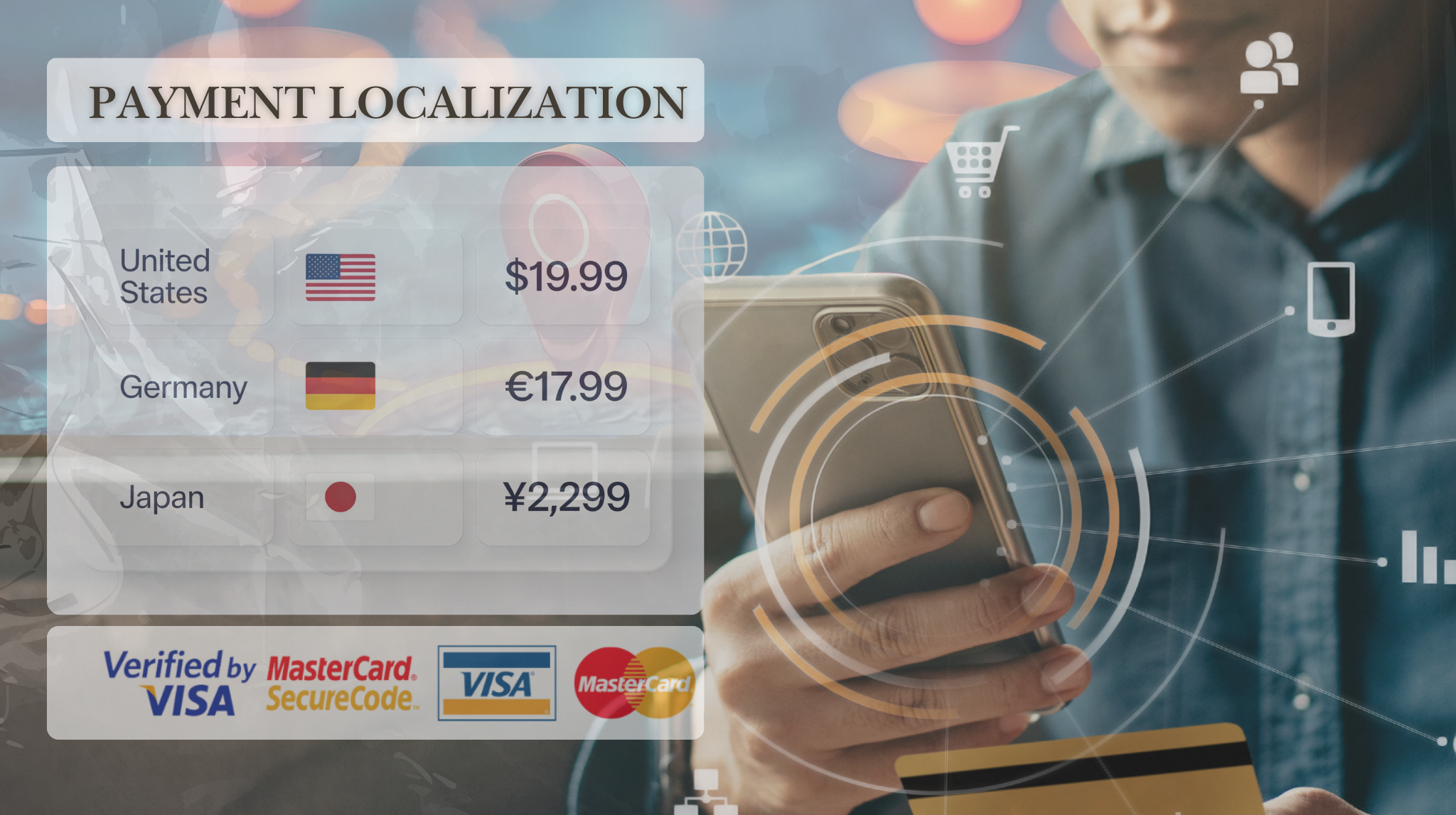
International commerce has entered a new phase during the past five years. Cross-border sales expanded rapidly as online stores reached buyers across Europe, Asia, the Middle East, and Latin America. Early growth felt simple. Translation and shipping solved initial barriers. Payments introduced the next challenge.
Payment localization now stands at the center of global ecommerce growth. Brands that ignore local payment habits face higher cart abandonment, lower trust, and wasted advertising spend. Brands that adapt to local payment expectations experience higher approval rates, stronger customer loyalty, and repeat purchases.
This report explains why payment localization has moved from a convenience feature to a business requirement. The focus remains practical. The objective is clear: help international brands understand the risks, data, and actions connected to localized payments.
What Payment Localization Means In Practice
Payment localization means offering payment methods that consumers already trust and use in each market. This includes local cards, digital wallets, bank transfers, regulatory compliance, currency display, and checkout language.
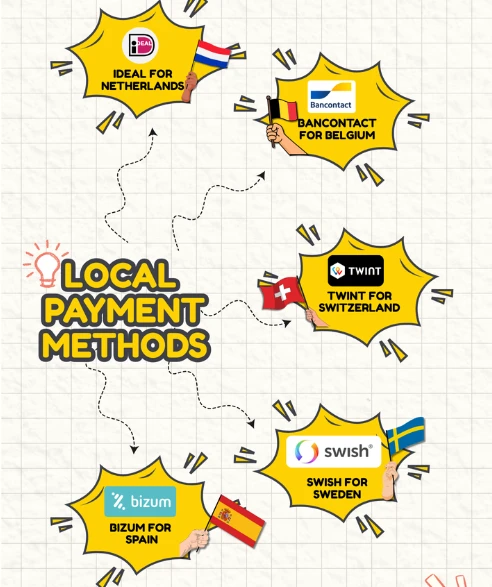
Buyers in Germany expect SEPA transfers or Sofort.In the Netherlands, shoppers usually look for iDEAL.Brazilian customers search for Pix or Boleto.Meanwhile, buyers in India prefer UPI.
Localization also covers currency formats, pricing transparency, and compliance with local regulations. When payments feel familiar, checkout feels safe. Trust builds quickly.
Why Global Checkouts Fail Without Local Payments
Checkout failure often begins with one missing payment option. A shopper reaches the final step, cannot find a trusted method, and exits the store.
Industry data shows more than half of online shoppers abandon checkout when their preferred payment option is unavailable. Advertising drives traffic. Product pages perform well. Checkout friction blocks conversion.
- Missing local wallets and bank transfers
- Forced currency conversion
- Extra verification steps
- Low cross-border card approval rates
- Mismatched local compliance requirements
Each issue reduces conversion rates. Combined, they can eliminate profitability.
Regional Payment Behavior Shapes Buying Decisions
Payment preferences differ significantly by country. Card dominance remains limited outside North America and select European markets.
Germany: Bank transfers dominate ecommerce. SEPA, Sofort remain widely trusted.
Netherlands: iDEAL accounts for most online payments. Credit cards play a minor role.
Brazil: Pix adoption grows rapidly. Boleto remains popular, especially for larger purchases.
India: UPI drives real-time payments. Cards often serve as a secondary option.
Southeast Asia: Digital wallets lead, with cash-based alternatives still common.
Ignoring regional behavior results in lost revenue. Matching local preferences builds trust and confidence.
Data Shows Local Payments Drive Conversions
Multiple ecommerce studies show consistent performance improvements after adding local payment methods.
- Higher checkout completion rates
- Lower payment decline ratios
- Reduced chargebacks
- Improved repeat purchase behavior
Merchants expanding payment options report revenue increases ranging from 20 percent to 70 percent, depending on region and product category.
Local payments remove friction. Friction destroys conversions.
Regulatory Pressure Makes Localization Mandatory
Payment regulations differ across markets. Europe enforces Strong Customer Authentication. Data residency laws vary by region. Licensing requirements change frequently.
Noncompliant payment setups lead to failed transactions, fines, or account suspensions. Localized payment providers embed compliance directly into checkout flows, reducing legal exposure for merchants.
Single global gateways rarely cover all regulatory needs. Regional expertise is essential.
Local Payments Reduce Declines And Fraud
Cross-border card transactions experience higher decline rates as issuing banks flag foreign activity. Buyers often abandon checkout after one failure.
Local payment rails reduce these declines. Domestic banks trust familiar transaction flows. Wallet providers handle authentication directly.
Fraud detection improves as local providers apply region-specific risk models. False declines decrease. Trust improves for both merchants and customers.
Localization Supports Brand Trust And Loyalty
Payment choice communicates respect for the buyer. Familiar options show brands understand local needs.
Trust increases repeat purchases. Repeat purchases reduce acquisition costs. Payment localization strengthens long-term brand value.
What Happens When Brands Ignore Payment Localization
- High cart abandonment in non-card markets
- Poor advertising return in emerging regions
- Increased customer support volume
- Negative reviews related to checkout issues
Solving these problems later costs significantly more. Early localization protects revenue and reputation.
Shopify Merchants Face Unique Payment Limits
Shopify powers millions of ecommerce stores globally. Default payment options work well in limited regions but fall short internationally.
Native checkout experience remains critical for trust. External redirects often reduce conversions.
Shopify-approved payment apps extend payment coverage without disrupting the checkout flow.
Where CartDNA Fits Into Payment Localization
CartDNA operates as a Shopify Payment App Development Partner focused on localized payments within native checkout.
The platform connects merchants to over 720 payment methods across more than 95 markets worldwide.
- Shopify-certified partner
- PCI-compliant infrastructure
- Native checkout integration
- Local wallets, BNPL, and bank transfers
- Multi-currency support
- Fraud and compliance management
Merchants gain global reach without custom development.
Practical Use Cases For Localized Payments
A UK brand entering Germany adds SEPA and Sofort to address low card acceptance. Conversion improves.
A European merchant expanding into Asia adds wallet support, reducing payment declines.
A global brand scales across regions using one unified integration while maintaining local relevance.
How Merchants Start Payment Localization
Successful payment localization follows a structured process.
- Market research to identify key regions
- Payment preference analysis
- Integration of Shopify-approved payment apps
- Testing and performance monitoring
Speed matters. Delays result in lost revenue.
Payment Localization Supports SEO And Paid Media
Improved checkout performance strengthens engagement metrics. Bounce rates fall. Conversion signals improve.
Paid advertising performs better when checkout friction is removed. Localized payments protect marketing spend.
How Shopify Payment Apps Support Global Commerce
Shopify payment apps for global commerce allow international brands to match local payment expectations without altering native checkout.
These apps add regional wallets, bank transfers, and multi-currency pricing directly within Shopify checkout.
For brands selling across borders, Shopify payment apps reduce friction, increase approval rates, and support scalable international growth.